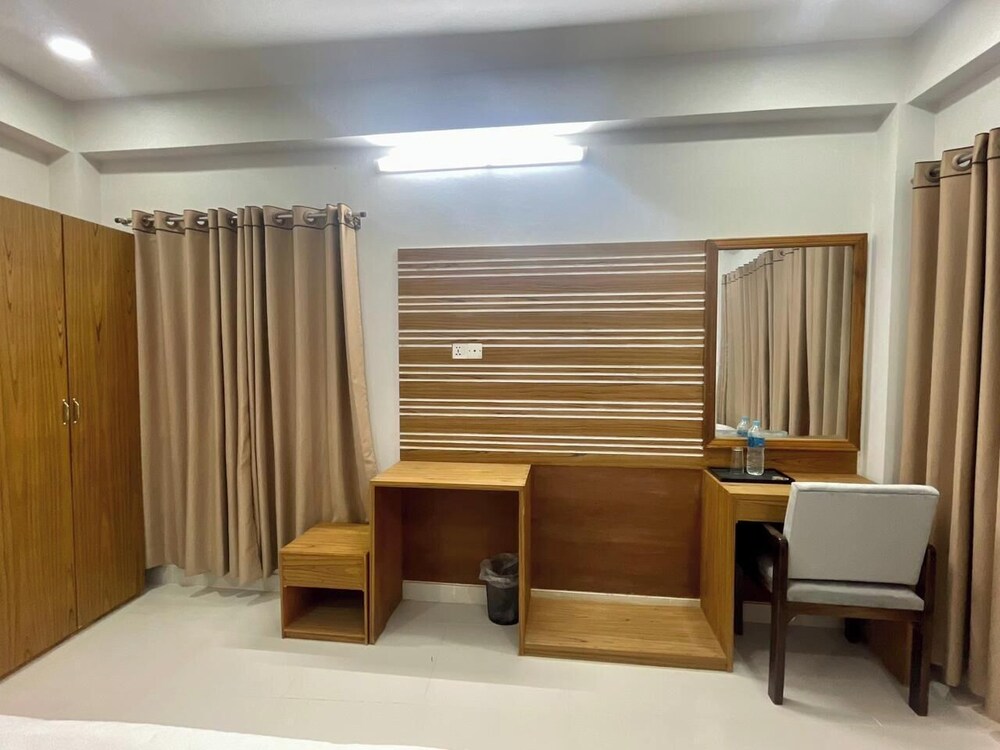
Shuktara Beach Resort Saint Martin
Shuktara Beach Resort Saint Martin is an economical option in Teknaf, Cox's Bazar, handy for travellers focused on Teknaf Beach and the main sights.
Guests typically choose Teknaf for its balance of location and price; Shuktara Beach Resort Saint Martin is a good fit if you want to be near the action in Cox's Bazar.
Key facts
What’s included
Where to stay in Cox's Bazar: Kolatoli, Laboni, Sugandha or Marine Drive?
Most first-time visitors should stay in Kolatoli (also written Kalatali), the strip where the bulk of the town's mid-range and four-star stock sits, about 3–4 km from Cox's Bazar Airport and a short walk down to the beach entrance. Laboni Point, roughly 2 km north along the beach road, is the oldest and busiest access point, closest to the Burmese Market and the municipal market, with older hotels that run $10–$25 cheaper per night than equivalent rooms in Kolatoli. Sugandha Point sits between the two and is where the seafood stalls and fry shops cluster, which makes it good value if you want to eat out three times a day without a rickshaw. Jhilongja, the union holding both the airport and the Cox's Bazar Iconic Railway Station, has plain guesthouses near the station that suit late train arrivals but leave you 8–9 km from the sand. Nuniar Chor and the Bakkhali river side are inland, cheap and functional rather than scenic.
South of town the pattern changes completely: Himchari (18 km), Sonarpara (about 28 km) and Inani (32 km) are resort addresses strung along Marine Drive, quiet, low-rise and with almost no independent restaurants, so you eat where you sleep. Inani's boulder-strewn beach and the resorts around Jaliapalong, including the large Royal Tulip Sea Pearl complex, draw couples and weekenders who want distance from the Laboni crowds; Shamlapur, 45 km south, is a working fishing beach with very few rooms. Teknaf, 80 km south at the Naf river, is worth a night only if you have a boat or a border-view reason to be there, while Ramu (16 km east) offers a handful of small stays near the Buddhist kyangs and the 100-ft reclining Buddha. Ukhia is the area people book by mistake: its guesthouses are largely occupied by staff working around the Kutupalong camps, and it is not a beach base. Moheshkhali, Sonadia, Kutubdia and Dulahazara are day trips, not places to sleep.
Best time to visit Cox's Bazar: month by month, and what it does to rates
The best months are November to February, when the Bay of Bengal is calm, daytime temperatures sit around 26–29°C and nights drop to 17–19°C. That is also when rooms cost the most: a mid-range sea-facing double that goes for $35 in September will ask $80–$110 in late December, and the week from 25 December to 2 January is the single most expensive stretch of the year after Eid, with 31 December beach crowds in Laboni and Sugandha running into the tens of thousands. Victory Day on 16 December and Ekushey February on the 21st both create three-night domestic surges. March and April are hot and hazy at 33–35°C with rates falling 20–30%, apart from a two-day bump around Pohela Boishakh on 14 April.
Ramadan is the quiet season nobody plans for — hotels across Kolatoli and Inani discount hard, but the Eid-ul-Fitr week immediately after is the busiest and priciest period of the whole calendar, with rates two to three times normal and popular properties full four to six weeks ahead. May and October carry genuine cyclone risk in the Bay of Bengal, and the monsoon proper runs June to September, when Cox's Bazar can take 700–900 mm of rain in July alone and red flags keep swimmers out of the water for days at a time. If you can accept grey skies and a rough sea, monsoon discounts of 40–60% are standard and the Marine Drive scenery is at its most dramatic. Durga Puja in early or mid-October fills hotels for four or five nights before the low rates return.
Getting around Cox's Bazar: from the airport, along Marine Drive and between areas
Cox's Bazar Airport (CXB) sits inside the town at Jhilongja, so the transfer to Kolatoli is 3–4 km and around 10 minutes; Laboni and Sugandha are 5–6 km, and a hotel car or a booked microbus costs roughly $6–$12 for the run. Since December 2023 the Cox's Bazar Iconic Railway Station has taken trains from Dhaka Kamalapur on the Cox's Bazar Express and Parjatak Express, an 8–9 hour journey, with the station about 9 km from the beach hotels — budget $4–$7 for a CNG auto-rickshaw into Kolatoli. Long-distance coaches from Green Line, Shohagh, Hanif and Saudia take 9–11 hours from Dhaka over the 400 km via the Chattogram–Cox's Bazar highway and drop at the Kolatoli and Jhilongja counters. Inside town you rarely need a car: battery-run tomtoms run the Kolatoli–Sugandha–Laboni line for under $0.50 a seat.
You do need wheels for the south. Marine Drive runs 80 km from Cox's Bazar to Teknaf, and the usual half-day loop of Himchari (18 km), Inani (32 km) and back takes three to four hours; a reserved CNG costs about $15–$22, a car with driver $35–$55 for the day. Ramu is 16 km east on the Chattogram–Teknaf road, Dulahazara Safari Park in Chakaria is roughly 50 km north on the highway, and Magnama Ghat in Pekua, the crossing point for Kutubdia, is about 65 km north. Moheshkhali is reached by speedboat from 6 No. Ghat on the Bakkhali river in around 30 minutes, or an hour by wooden trawler; Sonadia is a further short boat from Ghatibhanga. Self-drive hire is not a normal option here — everything is hired with a driver.