One market worth an evening, and a lot of markup to avoid
Shopping here divides cleanly. The Burmese Market in town is genuinely good — the best handicraft shopping between Chittagong and the Myanmar border, run largely by Rakhine traders, stocked with handloom cloth, lacquerware, bamboo and cane, wooden Buddhas, blankets and a great deal of imported plastic. The beach-strip stalls, by contrast, sell shell and “pearl” jewellery and souvenir tat at three times what it is worth.
Everything is haggled. Opening prices for a foreign visitor run roughly double the real one, sometimes more; halving the first number, staying friendly and being willing to walk away once will usually land you within twenty percent of the local price. Nobody is offended by this — it is the expected form of the transaction.
The best buys are textiles and lacquer. Rakhine handloom cloth, thami skirts and blankets are made locally and are a fraction of city prices; lacquerware and bamboo are good and light. The worst buys are shell jewellery, “pearls” and anything electronic. If you want to see the crafts being made rather than sold, spend a morning at the Ramu workshops first — they sell directly, cheaper.
The Burmese Market, and how to work it
A covered warren of small stalls a ten-minute walk inland from Laboni, the Burmese Market is the district’s one essential shopping stop. The stock is a mix: locally made Rakhine handloom cloth and thami skirts, lacquer bowls and boxes, bamboo and cane, wooden and brass Buddha images, blankets, dried fish, cosmetics and household goods imported across the border, and a large volume of unremarkable plastic.
The technique is simple. Walk the whole market once without buying, to learn the range of prices for the thing you want. Then go back, ask, halve the opening number, settle somewhere in the middle, and be prepared to leave once — which almost always produces a better price before you reach the next stall. Buying two of something is a legitimate lever. Cash only, small notes, and expect no receipts.
The best hours are five to nine in the evening, after the heat, when the market is busiest and most of the stalls are open. Friday afternoons are crowded. If you are shipping or flying home, remember that dried fish in hand luggage is a decision you make exactly once.
Food markets, dried fish and the fish landing
Boro Bazar, in the middle of town, is the working food market: vegetables, spices, sweets, tea, fruit and a fish section worth seeing early even if you are not buying. The prices here are the real prices, which makes it a useful calibration exercise after the beach strip.
The shutki market at the southern end of town is the most pungent and most photogenic corner of Cox’s Bazar — racks and sacks of dried loitta, chhuri and shrimp, sold by weight to buyers from across the country. Dried fish is the district’s signature export and a genuine local souvenir, at 150 to 400 taka for a packet, though it needs sealing properly for travel.
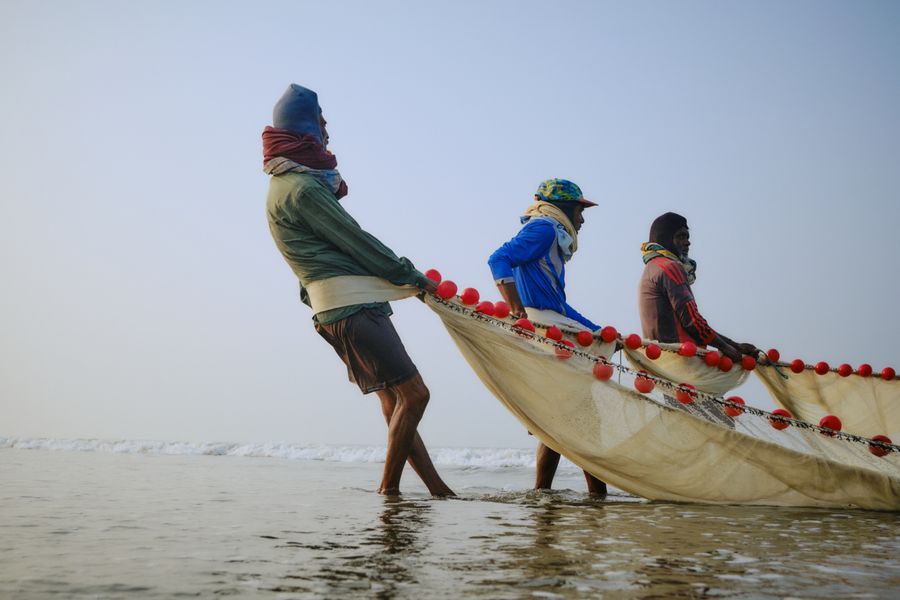
For atmosphere rather than shopping, the fish landing centre at the southern end of the town beach runs from about five to eight in the morning: boats in through the surf, sorting on the sand, ice trucks and shouted auctions. Ask before photographing the crews, and expect to be waved in and offered tea.
What to buy, what to skip, and what to pay
Buy: Rakhine handloom cloth (600–2,500 taka a length), thami skirts, lacquer bowls and boxes (300–1,500), bamboo and cane work, blankets in the cold months, packaged shutki, local betel-leaf and tea from the island stalls, and bronze or brass from the Ramu workshops if you can carry the weight.
Skip: shell and “pearl” jewellery, which opens at triple and is worth less than that; beach sarongs sold on the sand at three times the market price; “antique” Buddha images, which are neither antique nor legal to export if they were; and any electronics, which are imported, unwarranted and expensive.
A final practical note on export: do not buy coral, shells taken live, or turtle products — they are sold openly on the beach, they are environmentally destructive, and several are prohibited to export or import. Textiles, lacquer and food are the safe and better souvenirs.
Four places to shop, in order of interest
All within a ten- to twenty-minute ride of the beach strip.
Rakhine handloom, lacquer, bamboo, blankets and border imports in a covered stall warren. The one genuinely good shopping stop in the district.
The working food market: vegetables, spices, sweets and a fish section worth an early visit. Real prices, useful calibration.
Dried fish by the sack, sold to buyers nationwide. Overwhelming, photogenic, and the most local souvenir there is.
Bronze casters, lacquer turners and handloom weavers selling straight from the shed, below market prices. Combine with the monastery.
Shopping practicalities
Markets and the working town
Shopping questions
What should I buy in Cox’s Bazar?+
Rakhine handloom cloth and thami skirts, lacquerware, bamboo and cane work, blankets, and packaged dried fish. All are locally made or locally traded and cost a fraction of city prices. Skip the shell and pearl jewellery entirely.
How much should I haggle?+
Opening prices to a foreign visitor are roughly double the real one. Halve the first number, settle in the middle, and be prepared to walk away once — that alone usually produces a better price.
Where is the Burmese Market?+
In Cox’s Bazar town, about a ten-minute walk inland from the Laboni beach entrance, or 80–150 taka by CNG from Kolatoli. It is busiest and best between five and nine in the evening.
Is the dried fish worth buying?+
If you like it, yes — it is the district’s signature product, at 150–400 taka a packet. Get it sealed properly; the smell is formidable and will find its way through a suitcase.
Can I take shells or coral home?+
Do not. Coral and live-taken shells are sold openly, are environmentally destructive, and several are restricted or prohibited for export and import. Buy cloth or lacquer instead.