Getting there and what it costs
Ramu is about 16 kilometres east of Cox's Bazar town along the Ramu–Cox's Bazar Road. A CNG auto-rickshaw costs Tk 400–500 (US$4–5) each way and takes 30–40 minutes; a shared tempo costs Tk 50–70 (US$0.50–0.70) per person but leaves you at the bus stand, still a rickshaw ride (Tk 30–50) from the monasteries. I would take a CNG and agree on a round-trip fare with waiting time — Tk 700–800 (US$7–8) total — because return transport from Ramu can be scarce after 5pm. Most monasteries have no fixed entry fee, but a donation of Tk 100–200 (US$1–2) per person is appropriate; at the main temple, there is often a donation box near the main hall.
There is no ticket booth or official guide at any of the sites. If someone offers a tour, agree on a price (Tk 200–300) before you start. Food is simple: local tea stalls and small restaurants near the Ramu bus stand serve rice and curry for Tk 80–120 (US$0.80–1.20). I would carry cash — there are no ATMs in Ramu that reliably accept foreign cards, and mobile financial services like bKash work if you have a local number. Skip the so-called "Buddhist circuit" packages sold in Cox's Bazar; they add a stop at a silk shop and rush the monasteries.
The monasteries: what you are actually visiting
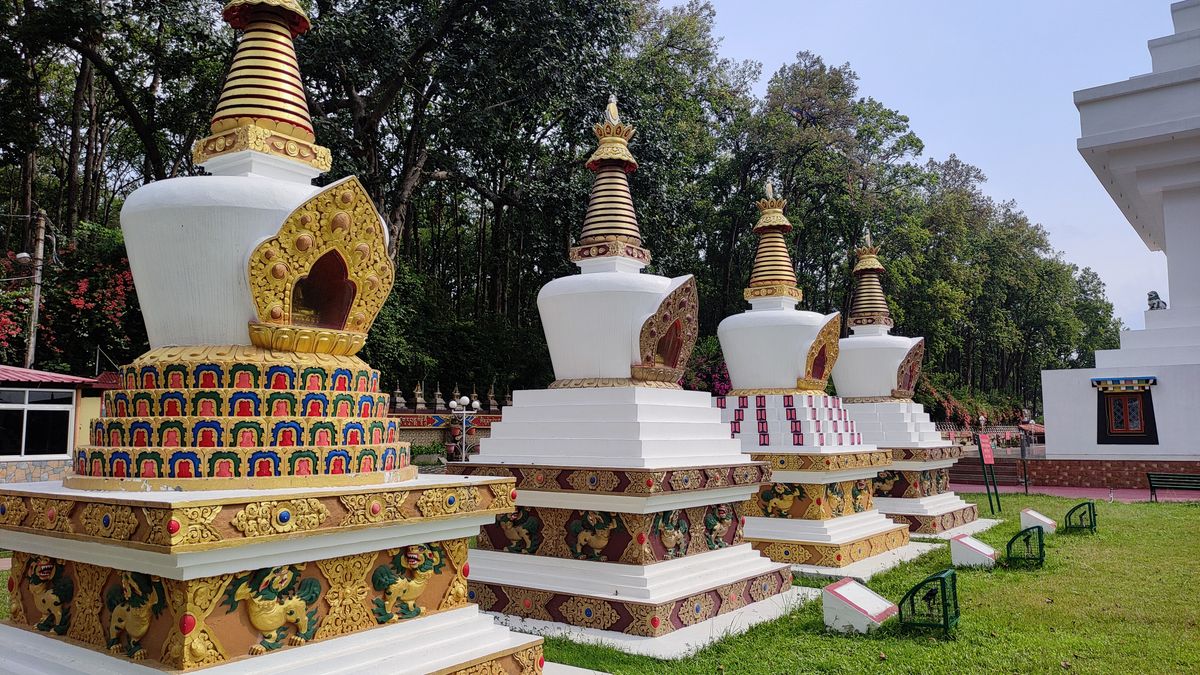
Ramu has a cluster of Buddhist temples and monasteries, locally called kyang. The most visited is the Ramu Central Buddhist Monastery (also known as Ramu Bouddha Vihar), a short rickshaw ride from the bus stand. It is an active monastic compound, not a museum: you will see monks in saffron robes, novices studying, and laypeople bringing offerings. The main hall houses a large bronze Buddha, and the site includes a small library and residential quarters. A second important site is the older monastery near the Ramu canal, sometimes called the "old kyang," which has a more weathered, quiet atmosphere and fewer visitors.
The architecture is a mix of traditional Burmese-style stupas and modern Bangladeshi Buddhist construction. Photography is allowed in the courtyards, but ask before photographing monks or inside the main prayer halls; some areas are reserved for monastics. The best time to visit is morning (7–10am) or late afternoon (4–6pm), when the light is soft and the monks are available. Avoid Fridays and full-moon days (Purnima) if you want quiet, as local Buddhist families come in large numbers. I would spend at least an hour at the main monastery and 30 minutes at the old one; skip the smaller shrines that charge an informal "entry fee" — they are not part of the traditional monastic network.
The bronze Buddha and what you may not photograph
The bronze Buddha at the Ramu Central Monastery is the most significant single object in the area. It is seated, roughly life-size, and believed to be several centuries old, though the exact date is not documented. It sits in the main hall on a raised platform, facing east. Visitors may approach and offer flowers or incense, but you should not touch the statue or climb onto the platform. Women should not enter the inner sanctum if a sign restricts it — some halls allow everyone, others do not, and the rule is usually posted in Bengali and English.
Photography of the bronze Buddha is generally permitted from the back of the hall, without flash. Do not take selfies with your back to the Buddha or pose in a way that mimics prayer. If a monk is chanting or a ceremony is underway, wait until it finishes. There is no charge to see the Buddha, but donations go toward butter lamps and maintenance. I would skip any "blessing" that involves a fixed price — legitimate blessings are free, and you may offer a donation afterward. If you want to understand the iconography, hire a local guide who speaks English or ask a monk politely; many younger monks speak some English.
The weaving workshops: what to see and buy
Ramu is known for its traditional weaving, particularly the lungi and thana (handloom cloth) produced by Buddhist families. The workshops are small, family-run operations in the lanes behind the main monastery. You can watch weavers at the pit loom, usually from 9am to 5pm, though many take a lunch break from 1–2pm. A lungi takes about a day to weave and sells for Tk 500–1,200 (US$5–12), depending on the thread count and design. Thanan (a length of cloth) ranges from Tk 300–800 (US$3–8).
You are welcome to buy directly from the weavers, and prices are negotiable but fair — a 10–15% discount is normal for a polite request. Cash is preferred; mobile payment is increasingly common. I would not buy from the roadside stalls near the bus stand, which sell machine-made imitations from Chittagong. Instead, ask at the monastery for a recommended workshop or look for the signboards that say "Handloom" in Bengali. If you are unsure, watch the weaver for a few minutes — if the loom is active, it is genuine. Do not take photographs without permission, especially of women weavers, who may prefer not to be filmed.
What to wear and how to behave
Ramu is a conservative rural area, and the Buddhist community here is modest in dress. Both men and women should cover shoulders and knees. For women, a loose top with sleeves and trousers or a long skirt is fine; a scarf to cover your head is not required inside the monastery, but it is respectful when entering a prayer hall. Men should avoid sleeveless vests and shorts. Shoes must be removed before entering any monastery building or compound — look for the shoe racks at the entrance. Socks are acceptable inside if the floor is cold, but bare feet are the norm.
Do not touch monks, especially if you are a woman — if you wish to offer something, place it on a table or hand it to a male companion. When sitting, avoid pointing your feet toward the Buddha or a monk. Speak quietly and do not interrupt chanting. If you are invited to share a meal, accept politely and eat with your right hand. Alcohol is not available in Ramu and is not part of local life; do not bring it. Public displays of affection are frowned upon. I would also skip any souvenir that includes a Buddha image for decoration — it is considered disrespectful to use Buddha imagery on clothing or bags.
What I would do and what to skip
I would start at Ramu Central Monastery by 8am, spend an hour there with the bronze Buddha, then walk to the old kyang for 30 minutes. After that, visit two weaving workshops — one near the monastery and one a bit further along the Ramu canal — and buy a lungi directly if you want one. Have lunch at a local tea stall (rice, dal, and fish curry, Tk 100–150) and be back in Cox's Bazar by early afternoon. That is a half-day, and it is enough.
Skip the large new temple complex on the main road that charges Tk 200 entry and has a gift shop; it is not part of the historic Buddhist community. Skip the "tribal village" tours that take you to staged homes. Skip any guide who promises to show you "secret" monasteries for a high fee. And skip the evening return if you are not sure of transport — either arrange a CNG round trip or plan to leave Ramu by 4pm. Ramadan timings affect opening hours; during that month, monasteries are quieter and some workshops close early, so check locally.
Questions, answered
Hotels in Cox’s Bazar
See all stays →Curated picks are coming — meanwhile, the live search covers every bookable property at the same price or better.