Where Sugandha sits and why it matters
Sugandha Beach begins just north of Kolatoli Point, the roundabout where Cox's Bazar's Hotel Motel Zone ends and the main beach road continues toward Himchari. From Kolatoli Circle it is roughly one kilometre — a ten- to fifteen-minute walk if you cut through the lanes behind the hotels, or a five-minute auto-rickshaw ride for about 50–80 taka (US$0.45–0.70). Most visitors never make that short hop, which is precisely the point. Sugandha is on the same sand as the famous beach, but far enough from the food stalls, horse trainers and selfie crowds of Kolatoli that you can hear the surf again.
The beach itself runs south-north from around the Sugandha Point access road up toward the smaller fishing hamlets before Himchari. It is not a separate beach with a gate or an entry fee; you simply walk north and the crowd thins with every hundred metres. The sand is the same grey-gold, the slope into the Bay of Bengal is the same gentle shelf, and the sunsets are identical to the ones people queue for at Kolatoli. What changes is density: at Kolatoli on a Friday evening you may share the waterline with a thousand people; at Sugandha the same evening can feel like a hundred.
That single kilometre also changes the price of sleeping. A basic fan room in the Sugar Mill area or along the Sugandha access road runs 800–1,500 taka (US$7–13) a night, where comparable rooms at Kolatoli run 1,500–2,500 taka (US$13–22). Mid-range air-conditioned rooms here sit around 2,500–4,000 taka (US$22–36). You are paying for distance, not quality. For travellers who care about the beach more than the lobby, that is a straightforward trade.
What the calm actually buys you
The first thing you notice is the absence of touts. At Kolatoli you are approached repeatedly — by horse owners, by people selling dried fish, by photographers, by groups of teenagers wanting a picture. At Sugandha the approaches drop by perhaps eighty per cent. You can sit on the sand for an hour without being asked to buy anything. For families with small children this matters enormously, because you are not constantly pulling a child away from a horse or a stranger's phone camera. For solo women travellers, the relative quiet is not just pleasant; it is the difference between a relaxing walk and a tense one.
Swimming is also easier. The lifeguard coverage that exists in Cox's Bazar is concentrated around Kolatoli and Sugandha Point, so staying north keeps you within reach of help while avoiding the packed waterline where beginners and strong swimmers all crowd the same thirty metres. The undertow on Cox's Bazar beach is genuinely dangerous in the monsoon months (June–September) and no section is safe then, but in the dry season the Sugandha stretch gives you room to float without kicking someone. Local boys from the fishing hamlets often swim here in the late afternoon; watching where they enter and exit the water is better advice than any signboard.
Finally, you get easier access to the fishing side of Cox's Bazar. The hamlets just north of Sugandha are working settlements where boats come in around dawn with hilsa, rupchanda and dried fish laid out on bamboo racks. It is not a staged attraction; it is a real market with real smells and real prices. A kilo of fresh hilsa in season might be 1,200–1,800 taka (US$11–16) depending on size and day, and the dried fish sold in bulk here is cheaper than the souvenir packets in Kolatoli. Walk up before 7am and you will see it properly.
What you give up for the quiet
The honest answer is convenience and choice. Sugandha has fewer restaurants, and the ones it has close earlier. At Kolatoli you can eat at 11pm — biryani, grilled fish, kebabs, Thai, Chinese, whatever the Hotel Motel Zone has on offer. At Sugandha most kitchens shut by 9:30 or 10pm, and the menu narrows to rice, dal, bhorta and whatever fish came in that day. If you want a late dinner or a proper coffee, you will be taking a rickshaw back to Kolatoli. That is fine once or twice, but if you are the kind of traveller who wants to wander out at 10pm and find options, this part of the beach will frustrate you.
Alcohol is not available in Sugandha, and it is barely available anywhere in Cox's Bazar. There are no licensed bars on the beach strip; a few upmarket hotels in the Kolatoli zone hold limited permits for foreign guests, but you should not plan a trip around drinking. This is a conservative Muslim-majority town and the beach at night is a family space, not a party one. Men and women sit separately in many of the tea stalls, and women swimming in anything less than a full cover-up will draw attention. That is not a reason to skip Sugandha; it is a reason to pack accordingly and to treat the calm as the point rather than a limitation.
You also give up the immediately photogenic. Kolatoli has the lighthouse, the Burmese market at the top of the beach road, the rows of colourful umbrellas and the constant human theatre. Sugandha has sand, water, fishermen and quiet. If your idea of Cox's Bazar is the lively strip, you will find Sugandha boring by the second afternoon. If your idea is a book, a long walk and an early night, you will wonder why anyone stays anywhere else. Neither is wrong; they are different holidays.
Where to stay and what to pay
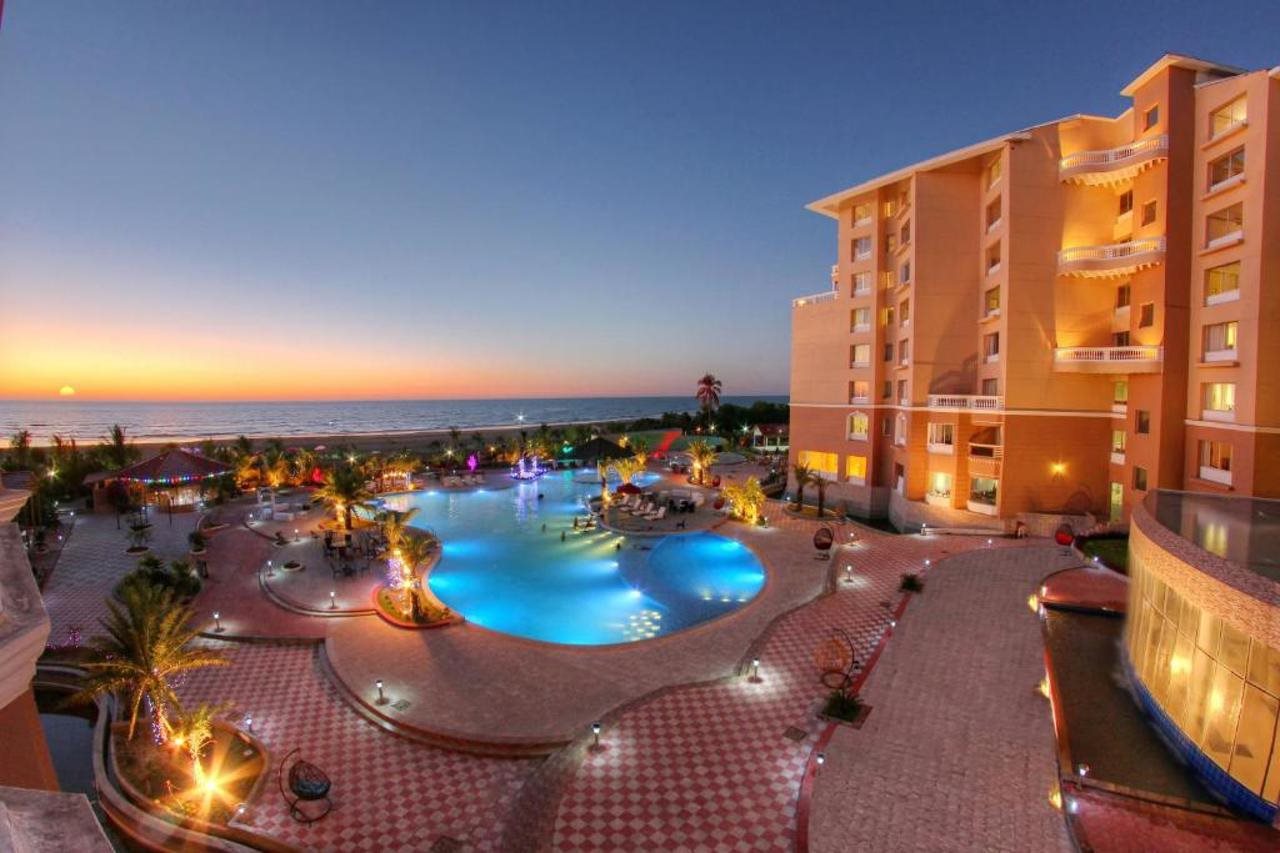
The accommodation at Sugandha splits into three rough tiers. Cheapest are the tin-roofed guesthouses in the lanes behind the beach, 700–1,200 taka (US$6–11) for a fan room with a shared or attached bathroom — clean enough, but expect power cuts and thin mattresses. Mid-range are the small privately run hotels on the Sugandha access road, 2,000–3,500 taka (US$18–31) for air-conditioning, hot water and a balcony that may or may not face the sea. Top of the local range are the larger resorts on the headland between Sugandha and Kolatoli, 5,000–9,000 taka (US$45–80), which give you a pool, a proper restaurant and a shuttle into town. None of these are international chains, and none should be booked on the strength of an online star rating alone.
Book by phone or through a Bangladeshi booking platform rather than an international site, and ask two specific questions: is the generator working, and is the sea view actually a sea view? In Cox's Bazar, 'sea view' often means a sliver of water past three other buildings. If the room is on the ground floor facing the lane, you are paying for the address, not the outlook. Ask for a room on the third floor or above on the seaward side and be willing to pay 300–500 taka (US$3–5) more for it.
My recommendation is to book two nights at Sugandha and keep the option of moving. Arrive, walk the beach both ways, eat at two local places, and decide whether the quiet suits you. If it does, extend. If by the second evening you are craving the buzz of Kolatoli, move south for the rest of the trip — you will have lost nothing but a rickshaw fare, and you will know which version of Cox's Bazar you actually came for.
Getting there, eating, and the daily rhythm
From Cox's Bazar bus terminal, a CNG auto-rickshaw to Sugandha costs 150–250 taka (US$1.35–2.25) and takes about fifteen minutes depending on traffic on the main beach road. From Kolatoli Circle it is 50–80 taka and five minutes. Rickshaws are plentiful until about 9pm, after which you may struggle to find one; note the number of a driver you like on day one. The beach access at Sugandha is through a short lane off the main road, easy to miss — look for the signboards of the small hotels and follow the sand.
Eating is simple and cheap. A plate of rice with two bhortas and a piece of fish runs 120–200 taka (US$1.10–1.80) at the local stalls; a full fish curry meal for two with rice and dal is 500–800 taka (US$4.50–7). Breakfast is paratha, dim bhuna and sweet tea for under 100 taka (US$0.90). The seafood is the reason to eat here — ask what came off the boats that morning rather than ordering from a menu, and agree the price before it is cooked. Avoid the handful of places with photographs of pizza and burgers on the sign; they are aimed at people who have not yet found the local food.
The rhythm of the day is set by the tide and the sun, not by entertainment. Mornings are for the fishing hamlets and a long empty walk south toward Kolatoli before the crowds arrive. Midday is for shade, tea and sleep. Late afternoon brings the beach back to life as families arrive from town, and sunset around 5:30–6:15pm depending on the season is the main event. After dark the strip is quiet, the generators hum, and the Bay of Bengal is a black line you can hear but not see. If that sounds like a holiday, Sugandha is your kilometre.
Questions, answered
Hotels in Cox’s Bazar
See all stays →Curated picks are coming — meanwhile, the live search covers every bookable property at the same price or better.