Where the buses, banks and bargains are
The town proper sits a ten-minute walk back from Laboni, and it is where the region actually works: the bus stand, the ATMs that reliably accept foreign cards, the Burmese Market, and hotels priced for business travellers rather than beachgoers.
It is a sensible base for one night around an early bus, or for a longer stay if you would rather spend your money on food than on a sea view. The beach is close enough to walk to before breakfast — you simply will not see it from your window.
The working town behind the beach
Cox’s Bazar town proper sits a ten-minute walk inland from Laboni, and it is where the district actually functions. The main artery is Bazar Ghata and the roads around the Boro Bazar market: banks, exchanges, mobile shops, pharmacies, courier offices, bus company counters and hundreds of small traders. The hotels here are built for business travellers, wedding parties and pilgrims rather than beachgoers, which is why the same standard of room costs noticeably less than on the strip.
It is not a pretty place. Traffic, horns, dust and congestion are constant between nine in the morning and nine at night, and there is no sea view from anywhere. What it offers is competence: an ATM that takes your card, a pharmacy with what you need, a tailor who can fix a bag, a bus counter where you can actually book a seat, and dinner for a third of what the beachfront charges.
For a certain kind of traveller this is the better base. If you are here for a week, spending your money on food and excursions rather than on a sea-facing window, the town is the rational choice — the beach is a ten-minute walk or a two-minute CNG ride away whenever you want it.
The Burmese Market and the rest of the shopping
The Burmese Market, a covered warren of stalls run largely by Rakhine traders, is the best shopping between Chittagong and the border. Handloom cloth and thami skirts, lacquerware, bamboo and cane, wooden Buddhas, blankets, dried fish, imported cosmetics and a great deal of plastic. Prices open at roughly double what things sell for; halve the first number, be pleasant, and be willing to walk. Textiles and lacquer are the buys; anything electronic is not.
Nearby, Boro Bazar is the food market — vegetables, spices, sweets, and a fish section that is worth seeing in the early morning even if you are not buying. The dried-fish (shutki) market at the southern end of town is the most pungent and most photogenic corner of Cox’s Bazar, and a legitimate half-hour of anyone’s trip.
Eat where the shoppers eat. The rice-and-curry places around the market serve a full plate — rice, dal, vegetables, fish or beef — for 150 to 300 taka, which is the best value food in the district. The biryani and kacchi houses near Bazar Ghata are the local Friday treat, and the sweet shops along the main road do the mishti that the beachfront hotels charge triple for.
Logistics: buses, banks, flights and SIM cards
Everything long-distance leaves from the town. Dhaka coaches run overnight and through the day from the bus stand and from the company counters on the main road — nine to eleven hours, $9 to $18 depending on whether you take an ordinary seat or a business-class recliner, and worth booking a day ahead in season. Chittagong is four to five hours and considerably cheaper. The train service to Dhaka from the new Cox’s Bazar station, a short ride north-east of town, is the most comfortable option when seats are available; book early, as they sell out.
The airport is ten minutes north of the town centre, with multiple daily flights to Dhaka and seasonal connections to Chittagong. Domestic fares run $45 to $90 one way and rise steeply for the December peak and Eid.
For money, use the bank ATMs and exchange counters around the market rather than the machines on the beach strip — acceptance of foreign cards is better and the rates for cash are fairer. A tourist SIM from any of the operator shops in town takes ten minutes with a passport copy, and data is cheap; buy it here rather than at the airport.
Choosing a room in town
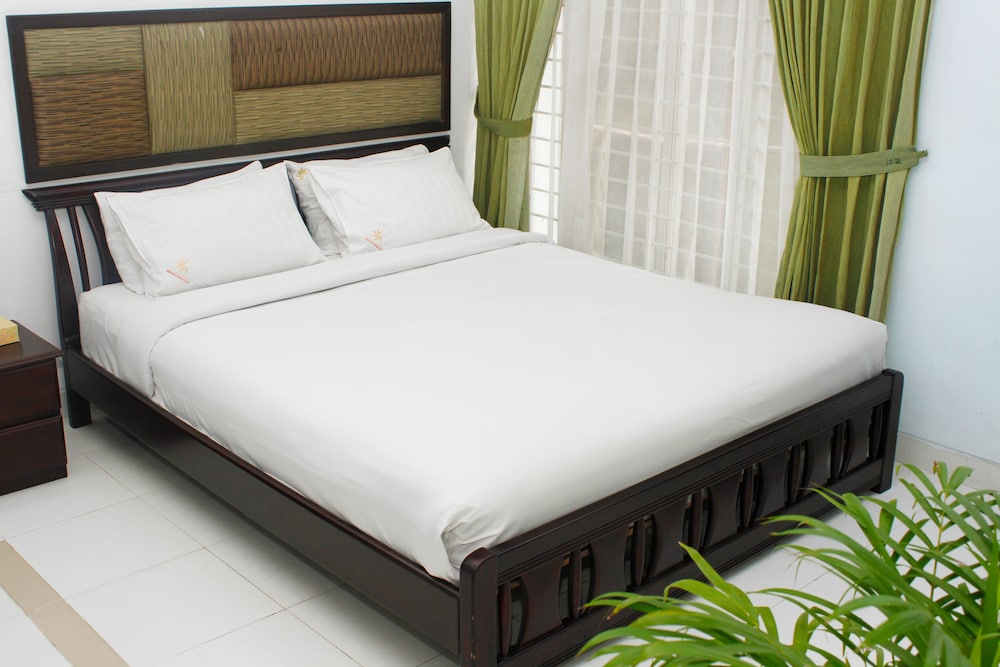
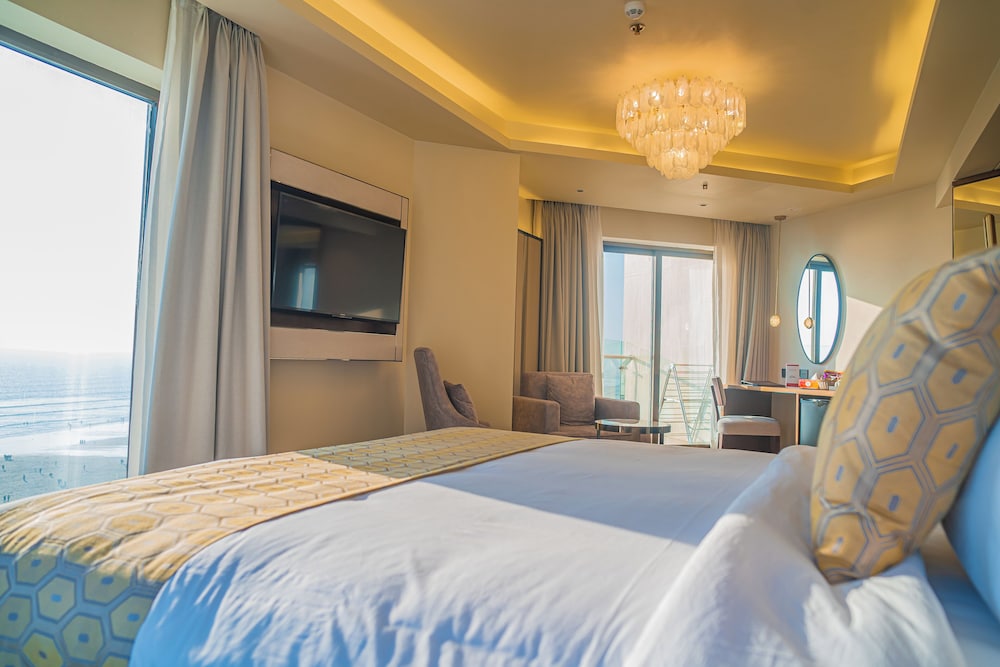
Expect $18 to $40 for a clean air-conditioned double with hot water and breakfast, and $45 to $80 at the handful of larger business hotels. The variables that matter are the road — ask for a room away from the main street, because the horns start early — the floor and whether there is a lift, and generator cover during load-shedding.
One night in town around an early bus or flight is an easy call. For a longer stay, walk the ten minutes to Laboni once in daylight before you decide: if that walk feels fine, the town saves you real money; if it does not, pay the premium and sleep on the strip.
Hotels in Cox’s Bazar Town
Live prices, re-checked this morning. Tap through for room types and cancellation terms.

Getting here and around
Cox’s Bazar Town in pictures
Questions about Cox’s Bazar Town
Should I stay in town or on the beach?+
On the beach, unless you have an early bus, want the cheapest mid-range rooms, or are here to shop. The town is ten minutes from the sand either way.
Where do I change money?+
The banks and exchanges around the main market handle foreign cards and cash most reliably; beach-strip rates are worse.
What is the Burmese Market like?+
The best handicraft shopping in the region — textiles, lacquer and Rakhine goods. Haggle hard; opening prices are roughly double.